Source Reflective Logo Safety Hoodie for workers, traffic, and security
Compare 30 Reflective Logo Safety Hoodie options from verified Chinese suppliers. Buyers can evaluate customization, materials like cotton or polyester, and features such as waterproofing or warmth for diverse industrial applications.
Key considerations
Products List


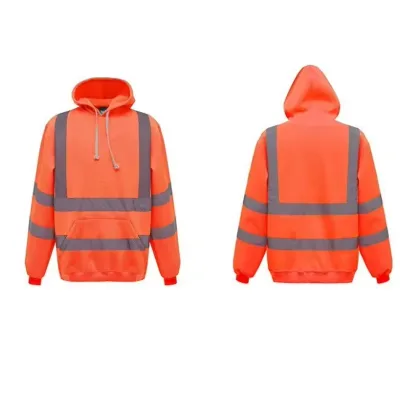
Customized Logo High Visibility Fleece Lined Hoodie Hi Vis Reflective Safety Hoodie
$7.00 - $15.00
MOQ: 100 Pieces




Armor Hi Vis Lime Yellow Reflective Jumper Traffic Quarter Zipper Safety Hoodie
$9.90 - $12.90
MOQ: 500 Pieces


Comprehensive Sourcing Guide
Strategic Sourcing Guide for Reflective Logo Safety Hoodies
Understanding Product Variations and Core Specifications
When sourcing a Reflective Logo Safety Hoodie, buyers must first navigate the significant variation in product attributes found within the market. The term "safety hoodie" often encompasses a spectrum of garments ranging from casual streetwear with reflective accents to high-performance workwear designed for hazardous environments. Based on current market observations, the product category includes distinct types such as "Hoody" styles and "Reflective Coat" variations, each serving different operational needs. A critical observation is the divergence in material composition; some listings specify "Cotton" as the primary fabric, while others utilize "Blends" or "Polyester." This distinction is paramount because cotton offers breathability and comfort for general use, whereas polyester blends often provide the durability and moisture-wicking properties required for active work environments.
The technical specifications further define the utility of these garments. Sleeve length is consistently observed as "Long Sleeve," and the hood type is predominantly "Fixed," ensuring the hood remains in place during movement. However, sizing presents a complex variable. Buyers encounter options ranging from specific sizes like "S" to "Free Size" and fully "Customizable" dimensions. This variability suggests that a single SKU rarely satisfies all procurement needs. Furthermore, the functional attributes of the product vary significantly. While some items are marketed with a "Heavyweight" function for "Winter" seasons, others are designed for "Spring / Autumn" with features like "Warm" insulation. A subset of products explicitly claims "Waterproof" functionality, which is a critical differentiator for outdoor workers facing inclement weather. Additionally, the "Fabric Weight" is often listed as "Customized," indicating that buyers can request specific gram weights to meet thermal or durability requirements.
Technical Compliance and Certification Verification
In the realm of safety apparel, visual appearance is secondary to regulatory compliance. Buyers must rigorously verify the certification status of any potential supplier. While the market data mentions "Europe The Us Certification" as a generic attribute, it does not confirm specific adherence to international safety standards. It is crucial to distinguish between general quality claims and verified safety certifications. The background context references standards such as ISO 20471 and EN 1149-3, which are relevant for high-visibility clothing, yet these should not be assumed to apply to every listed product without explicit verification. Similarly, certifications like GOTS, OEKO-TEX, and BSCI are often cited in broader textile discussions but must be confirmed on a per-supplier basis.
When evaluating a Reflective Logo Safety Hoodie, the primary technical requirement is the visibility of the reflective logo. The product attributes indicate that "Logo" customization is "Available," and the "Design" can be "Customized." However, the reflectivity itself must meet specific luminance and retro-reflective coefficients defined by local regulations. For instance, in the United States, compliance with ANSI/ISEA 107 is often required, while Europe relies on EN ISO 20471. Buyers should not rely on the generic term "Safety" in a product title. Instead, they must request test reports that explicitly reference the applicable standard for the target market. The presence of a "Certificate: Europe The Us Certification" in a listing is a starting point for inquiry, not a guarantee of compliance. Procurement teams must demand current, third-party test certificates that match the specific product model, such as "H-041801," to ensure the reflective materials have not degraded and meet the required colorimetric and photometric standards.
Cost Drivers and Pricing Structure Analysis
The pricing structure for reflective safety hoodies is influenced by a complex interplay of material costs, customization levels, and order volume. The observed price range in the market spans from $4.98 to $128 USD, a variance that reflects the difference between basic cotton blends and high-performance, waterproof, or heavy-duty polyester constructions. Several key factors drive these costs. First, the material composition is a primary driver; polyester and specialized blends typically command higher prices than standard cotton due to their enhanced durability and functional properties like "Quick Dry" and "Anti-Wrinkle" capabilities. Second, the level of customization significantly impacts the unit cost. Products offering "Customized Design," "Custom Logo," and "Customized Weight" require additional setup fees and longer production cycles.
The Minimum Order Quantity (MOQ) is another critical cost determinant. The observed MOQ range is between 20 and 1000 units. Smaller orders, often falling near the 20-unit threshold, will carry a higher per-unit cost due to the fixed costs of setup and sampling. Conversely, larger orders approaching 1000 units benefit from economies of scale. Buyers must also consider the "Sample Time," which is observed to be between 7-10 working days. This lead time for samples must be factored into the overall project timeline and budget, especially if multiple iterations of the design are required. Additionally, the "Product Packing" method, whether "1 PCS Per Poly Bag" or "Fit in a Box," affects logistics costs. Bulkier packaging or specialized boxing for retail presentation will increase the final landed cost. Finally, the "Service" aspect, including "Custom OEM ODM" capabilities, adds value but also cost, as it involves intellectual property management and specialized production lines.
Typical Applications and Use Case Scenarios
Reflective logo safety hoodies are deployed across a diverse range of industries, each with specific environmental and safety requirements. The product attributes highlight several distinct application areas. One primary use case is for "Security" personnel and "Traffic Warden" roles, where high visibility is essential for safety in low-light conditions. These users often require "Reflective Coat" or "Reflective T-shirt" variants that may be integrated into a hoodie style for comfort during extended shifts. Another significant sector is "Sanitation Workers" and "Road Administration," where the garments must withstand harsh conditions and provide protection against elements. The "Application: Outdoor Work" attribute confirms the suitability for these environments.
Furthermore, the "Suitable for: Shopping" attribute suggests a secondary market for casual or promotional use, where the safety features are present but the garment serves a dual purpose of brand visibility and comfort. The "Feature: Warm" and "Season: Winter" attributes indicate that these hoodies are particularly valuable for cold-weather operations, such as construction or utility work in northern climates. The "Function: Durable, Breathable" and "Feature: Anti-Static" attributes are critical for workers in environments with static electricity risks or those requiring high mobility. The "Usage" list explicitly mentions "Firemen and Workers," suggesting that while the product may not be certified as full PPE for fire suppression, it serves as a high-visibility outer layer for general industrial safety. Buyers must align the specific product features, such as "Waterproof" or "Heavyweight," with the actual working conditions of their target workforce to ensure the procurement delivers genuine safety value.
Supplier Evaluation and Operational Capabilities
Selecting the right supplier requires a deep dive into their operational capabilities and reliability. The market data indicates that the "prod_origin" is "China," which is a common hub for textile manufacturing. However, the origin alone does not guarantee quality. Buyers should evaluate suppliers based on their "Service" offerings, specifically their ability to handle "Custom OEM ODM" requests. This capability indicates a supplier's flexibility in adapting designs and specifications to meet unique client needs. The "Sample Time" of 7-10 days is a standard benchmark, but suppliers who can consistently meet this timeline while maintaining quality are preferable.
The "Quality" attribute is listed as "High Qualiy" in some listings, but this is a self-reported claim. A robust supplier evaluation process should include requests for factory audits, references from previous clients, and evidence of consistent quality control processes. The "Standard size" and "Standard" packaging dimensions (e.g., 504535cm or 26165) provide insight into the supplier's logistics efficiency. Suppliers offering "Customizable" sizes demonstrate a higher level of manufacturing flexibility. Additionally, the "prod_packing" methods, such as "by Sea by Air," indicate the supplier's experience with international shipping and their ability to adapt to different logistical requirements. Buyers should verify if the supplier has experience with the specific "Certificate" requirements of their target market, as this experience often correlates with a deeper understanding of compliance standards.
Quality Control and Long-Term Procurement Strategy
Implementing a rigorous quality control (QC) strategy is essential for maintaining the integrity of safety apparel. Given the critical nature of reflective materials, QC must go beyond visual inspection. Buyers should establish clear acceptance criteria for the reflectivity of the logo, ensuring it meets the specified luminance requirements. The "Feature: Anti-Wrinkle, Quick Dry, Anti-Static, Stain-Resist" attributes should be verified through specific testing protocols rather than relying on supplier claims. For "Waterproof" claims, water resistance testing is mandatory to ensure the garment performs as expected in wet conditions.
Long-term procurement considerations involve building a sustainable supply chain. The "Sample Time" and "Lead Time" variability observed in the market necessitate careful planning. Buyers should aim to establish a relationship with a supplier who can provide consistent "Sample Time" and reliable "MOQ" flexibility. The "Design: Customized Design" and "Logo: Custom" options allow for brand consistency over time, but buyers must ensure that the supplier can replicate these designs accurately across multiple production runs. The "Standard" packaging and "prod_packing" consistency are also vital for inventory management and retail presentation. Finally, buyers should monitor the "Quality" trends over time, requesting periodic re-certification or re-testing of the reflective materials to ensure that the safety standards are maintained throughout the product's lifecycle. By focusing on these technical and operational details, buyers can secure a reliable supply of reflective logo safety hoodies that meet both safety regulations and operational demands.
FAQs
Can I customize the logo and design on the hoodie?
Yes, customization is available for both the logo and the design. Buyers can request specific designs and custom logos to match their brand identity, with sample times typically ranging from 7 to 10 working days.
What materials are used for these safety hoodies?
The hoodies are constructed from Cotton, Blends, or Polyester depending on the specific model. Cotton offers breathability, while Polyester blends provide durability and features like quick drying and anti-static properties for work environments.
What is the minimum order quantity for these products?
The minimum order quantity ranges from 20 to 1000 units depending on the supplier and customization level. Smaller orders near 20 units may have higher per-unit costs compared to larger orders approaching 1000 units.
Are these hoodies suitable for winter outdoor work?
Yes, specific models are designed for Winter seasons with heavyweight functions and warm features. These garments are suitable for outdoor work applications including security, sanitation, and road administration in cold conditions.
What certifications do these products hold?
Some listings mention Europe and US certifications, but specific standards like ISO 20471 require verification. Buyers must request third-party test reports to confirm compliance with local safety regulations for reflective materials.
How long does it take to receive a sample?
Sample time is typically 7 to 10 working days for customized designs. This lead time should be factored into project planning, especially if multiple design iterations are required before full production.